I’ve spent the past two years implementing AI agents across various e-commerce operations, and I can tell you they represent a genuine leap forward from traditional automation. Unlike the simple chatbots or rule-based systems I used to rely on, AI agents can actually reason through problems, break complex tasks into manageable steps, use external tools, and improve based on outcomes. For my e-commerce clients and my own projects, this has meant automating processes that previously required constant human judgment: inventory optimization, dynamic pricing, and nuanced customer support.
In my experience, AI agents represent a fundamental shift in how I solve these challenges. Unlike conventional automation that executes predefined scripts, my AI agents reason through problems, adapt to new situations, and take actions autonomously. This means I now have systems that genuinely think about inventory decisions, pricing strategies, and customer interactions rather than blindly following if-then rules.
What Makes AI Agents Different from Traditional Automation
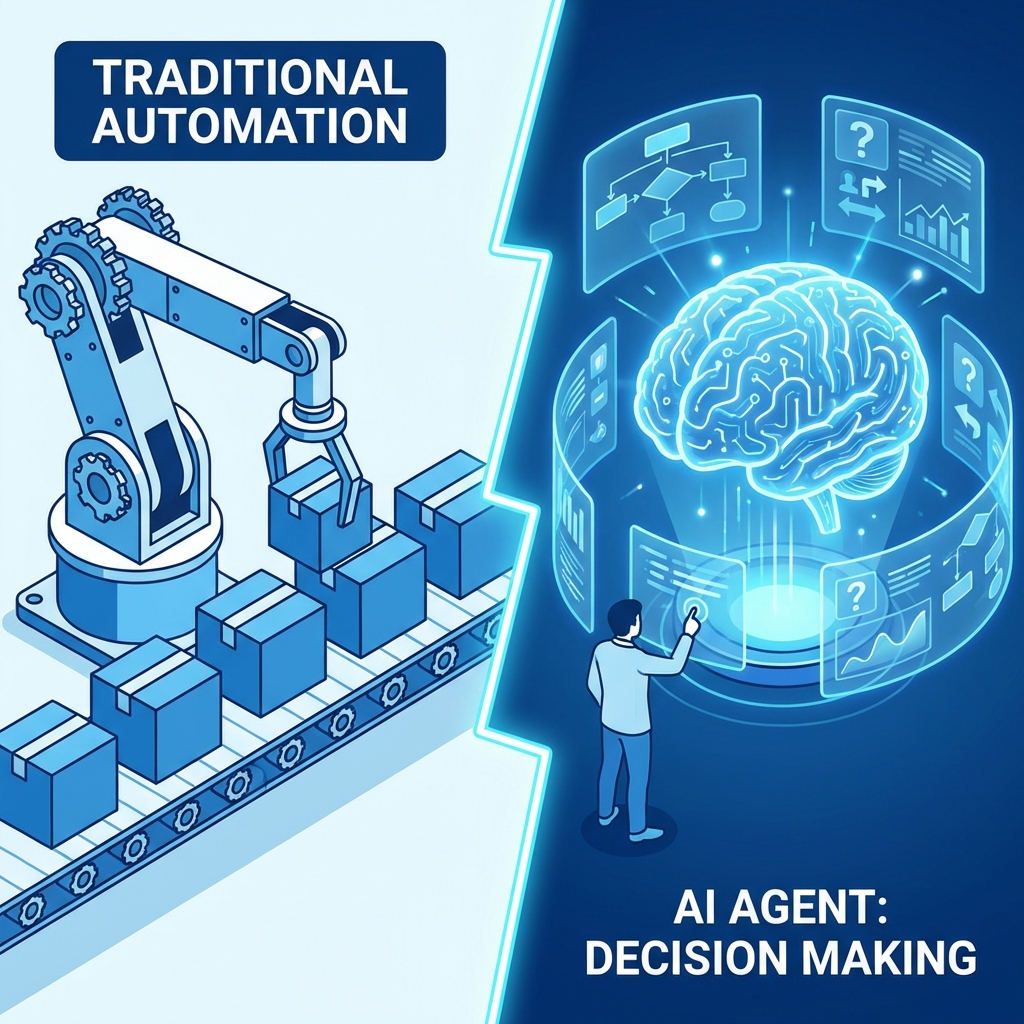
I like to explain it this way: standard automation operates like a vending machine. Insert specific input, receive specific output. A traditional inventory system might reorder product X when stock drops below Y units. Simple, predictable, and completely unable to handle exceptions.
The AI agents I build function more like capable employees. They perceive their environment through data feeds and APIs. They reason about what actions make sense given current conditions and goals. They execute those actions through connected systems. Most importantly, they learn from outcomes and adjust their approach.
Key characteristics I look for in effective AI agents:
- Goal-oriented behavior - My agents work toward objectives rather than following scripts
- Environmental awareness - They monitor data streams and respond to changing conditions
- Autonomous decision-making - Complex choices happen without my intervention
- Tool usage - They call APIs, query databases, and interact with external systems
- Memory and learning - Past interactions inform future decisions
The practical difference becomes clear in real scenarios I’ve encountered. When a supplier delays shipment, a traditional system triggers an alert. My AI agent evaluates alternative suppliers, checks current inventory velocity, considers whether to adjust pricing to slow sales, and potentially executes a backup order automatically.
How I Handle Inventory Management with AI Agents
Inventory is where I’ve seen the highest-impact applications for AI agents in e-commerce. The complexity of managing stock levels, predicting demand, and coordinating with suppliers creates exactly the kind of multi-factor decision environment where my agents excel.
Demand Forecasting Beyond Historical Patterns
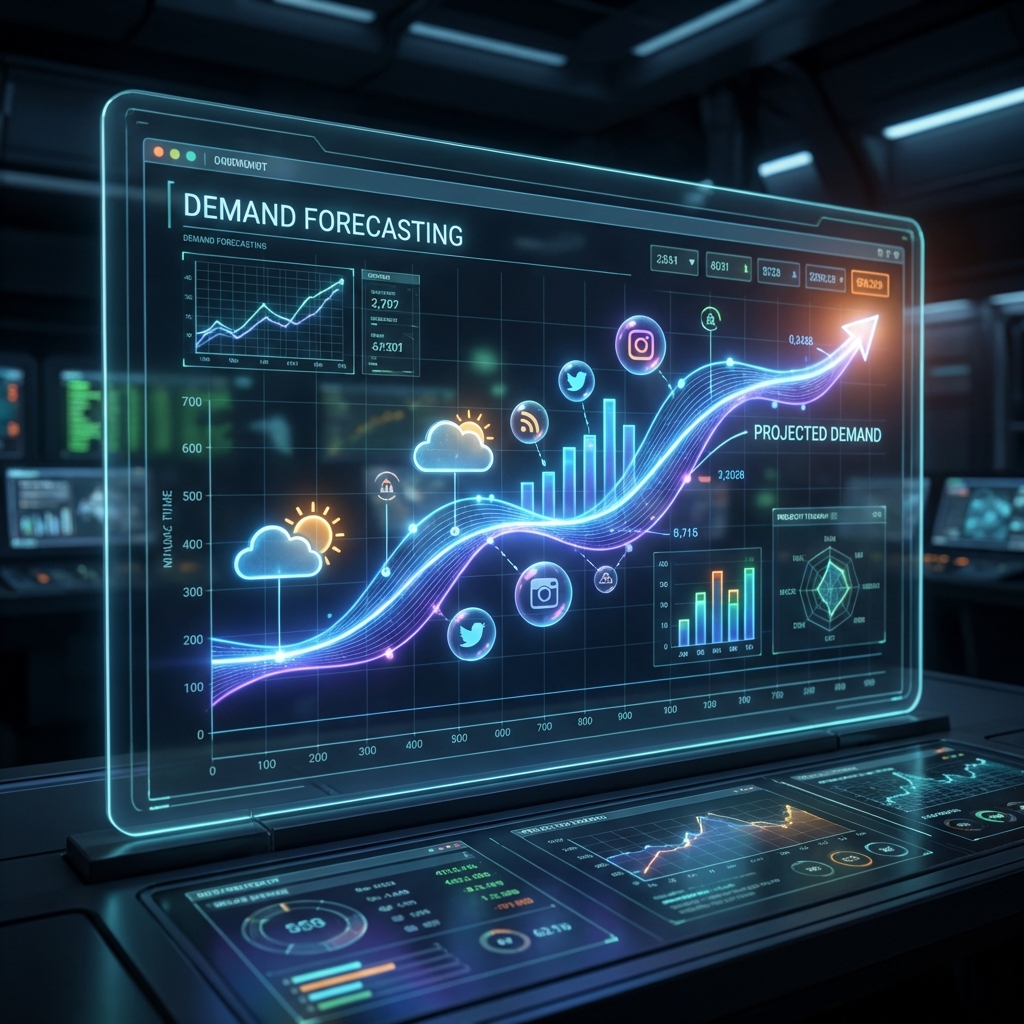
Traditional demand forecasting relies heavily on historical sales data. The AI agents I’ve built incorporate far more signals into their predictions:
- Social media sentiment around products and brands
- Weather forecasts affecting seasonal merchandise
- Competitor stock levels and pricing changes
- Economic indicators and consumer confidence metrics
- Marketing campaign schedules and expected traffic impacts
- Search trend data showing emerging interest
One of my agents monitoring a sporting goods store noticed increased social chatter about an upcoming marathon, cross-referenced with weather forecasts predicting ideal race conditions, and proactively increased running shoe inventory before demand spikes became apparent in sales data.
Automated Reordering with Supplier Intelligence
Rather than triggering orders at fixed thresholds, I configure my AI agents to consider the full context around each reorder decision:
Factors my inventory agents evaluate:
- Current stock levels across all warehouse locations
- Incoming shipments and their expected arrival dates
- Supplier lead times and historical reliability scores
- Current and projected demand velocity
- Storage capacity and associated costs
- Cash flow implications of order timing
- Bulk discount opportunities and minimum order quantities
I’ve watched my agents delay reordering a slow-moving item to consolidate with an upcoming larger order and capture volume discounts. Or expedite an order for a trending product even though stock levels appeared adequate, anticipating demand acceleration.
Multi-Location Inventory Balancing
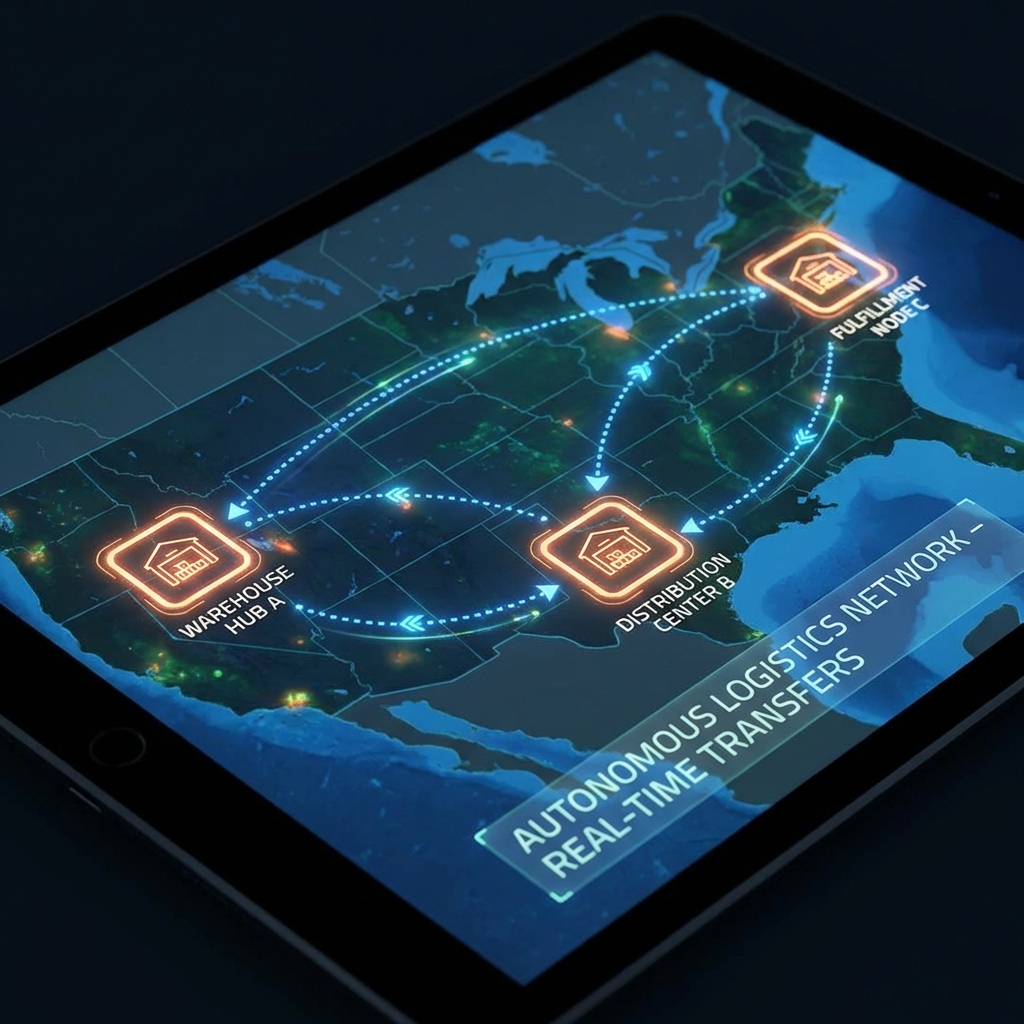
For businesses I work with that operate multiple warehouses or retail locations, my AI agents optimize inventory distribution automatically. They analyze regional demand patterns, shipping costs, and stock levels to determine optimal allocation.
# Example agent task definition for inventory balancing
inventory_agent_config = {
    "goal": "Maintain optimal stock levels across all locations while minimizing holding and shipping costs",
    "tools": [
        "query_inventory_levels",
        "get_regional_demand_forecast",
        "calculate_transfer_costs",
        "initiate_stock_transfer",
        "adjust_reorder_points"
    ],
    "constraints": [
        "Never let any location fall below safety stock",
        "Prioritize transfers over new orders when economical",
        "Flag decisions requiring human approval above $10,000"
    ],
    "review_frequency": "hourly"
}
How I Implement Dynamic Pricing Through Autonomous Agents
Pricing decisions happen too fast and involve too many variables for me to manage manually at scale. My AI agents monitor market conditions continuously and adjust prices within the parameters I define to optimize for revenue, margin, or market share objectives.
Competitive Price Monitoring and Response
My AI pricing agents track competitor prices across marketplaces and adjust accordingly. But unlike simple price-matching rules, they consider strategic factors:
- Brand positioning and whether matching a discount undermines perceived value
- Inventory levels and whether clearing stock justifies margin compression
- Customer lifetime value for the products in question
- Bundling opportunities that maintain margin while appearing competitive
- Timing of price changes relative to typical shopping patterns
I’ve seen my agents discover a competitor dropped prices on a product category but recognize from inventory data that the competitor was likely clearing discontinued stock. Rather than matching the temporary discount, the agent maintained prices and prepared to capture demand when the competitor sold out.
Margin Optimization Across Product Catalogs
Managing margins across thousands of SKUs requires constant attention that my AI agents provide automatically. They identify products with pricing power based on demand elasticity testing and gradually optimize margins upward where the market supports it.
How my margin optimization agents operate:
- Establish baseline conversion rates at current prices
- Implement small, controlled price increases on selected products
- Monitor conversion impact over statistically significant periods
- Maintain increases where conversion remains stable
- Revert or reduce prices when conversion drops unacceptably
- Document learnings to inform future pricing decisions
This creates a continuous optimization loop I could never maintain manually across large catalogs.
Promotional Pricing Strategy
My AI agents handle the complexity of promotional pricing by evaluating which products to discount, by how much, and for how long. They balance competing objectives like clearing excess inventory, acquiring new customers, and maintaining healthy margins.
When I have an agent plan a seasonal promotion, it analyzes past campaign performance, current inventory positions, and margin requirements to recommend specific products for deep discounts while protecting key margin drivers from unnecessary price reduction.
How I Automate Customer Queries with AI Agents
Customer support represents perhaps the most visible application of AI agents in my e-commerce work. The agents I deploy go far beyond simple chatbots with canned responses. They understand context, access order and inventory data, and resolve issues autonomously.
Order Status and Tracking Intelligence
Rather than directing customers to check tracking numbers manually, my AI agents proactively manage order communication:
- Monitor shipping carrier data for delays or issues
- Send preemptive notifications before customers need to ask
- Identify potential delivery problems and initiate resolution
- Offer alternatives when shipments face significant delays
- Process reshipments or refunds according to defined policies
I recently watched one of my agents handle a delayed shipment by determining from carrier data that weather caused the delay, calculating a new expected delivery date, sending a personalized update to the customer explaining the situation, and offering a small discount on a future purchase as a goodwill gesture. All of that happened without any human involvement.
Product Recommendations and Upselling
I’ve found that customer interactions become opportunities for intelligent product discovery. My AI agents analyze the customer’s purchase history, browsing behavior, and current query context to surface relevant products naturally within conversations.
When a customer asks about a camera, my agent recognizes they previously purchased photography books and mentions compatible lenses that match their apparent interest level and budget based on past purchases. The recommendation feels helpful rather than pushy because it demonstrates genuine understanding of the customer’s needs.
Returns and Issue Resolution
My AI agents handle return requests by evaluating policies, checking product eligibility, and processing approvals or rejections with appropriate explanations. They also identify patterns in return reasons that might indicate product quality issues or description inaccuracies.
Capabilities I build into my returns processing agents:
- Verify purchase within return window
- Check product category for return eligibility
- Evaluate reason code and apply relevant policy rules
- Generate return shipping labels automatically
- Initiate refund processing upon receipt confirmation
- Escalate edge cases requiring human judgment
- Log insights about return patterns for business analysis
Building AI Agents: The Tools and Frameworks I Use
Several frameworks have emerged to simplify AI agent development for business applications. My choice depends on technical requirements, team capabilities, and integration needs.
LangChain for Structured Agent Development
I rely heavily on LangChain for building AI agents that interact with external tools and data sources. It handles the complexity of managing conversations, executing tool calls, and maintaining context across interactions.
Key LangChain components I use for e-commerce agents:
- Agents - Decision-making logic determining which actions to take
- Tools - Interfaces to external systems like inventory databases and payment processors
- Memory - Conversation history and learned information persistence
- Chains - Sequences of operations for complex multi-step tasks
I find LangChain works particularly well for agents requiring structured integration with existing business systems. The framework provides clear patterns for connecting to databases, APIs, and other data sources while maintaining conversation coherence.
AutoGPT and Autonomous Agent Patterns
I’ve also experimented extensively with AutoGPT, which pioneered the concept of fully autonomous AI agents that work toward goals with minimal human oversight. While the original project focused on general-purpose autonomy, I’ve found its architectural patterns apply directly to business applications.
AutoGPT-style agents excel at open-ended tasks where the path to completion requires dynamic planning. In my e-commerce work, this includes researching new supplier options, analyzing competitor strategies, or investigating customer complaint patterns.
The trade-off involves less predictability. Fully autonomous agents sometimes pursue unexpected approaches that require monitoring. In most of my production e-commerce implementations, I use AutoGPT concepts within bounded operational domains rather than giving agents complete freedom.
Custom Agent Architectures
For larger e-commerce operations, I sometimes build custom agent frameworks tailored to specific needs. This provides maximum control over agent behavior and integration but requires significant development investment.
I recommend custom architectures when:
- Existing frameworks lack required integrations
- Performance requirements exceed framework capabilities
- Proprietary business logic requires deep customization
- Regulatory requirements demand specific audit capabilities
Implementation Considerations I’ve Learned
Deploying AI agents in production e-commerce environments requires careful attention to reliability, safety, and integration challenges. Here’s what I’ve learned.
Guardrails and Approval Thresholds
I always ensure my production agents operate within defined boundaries. Common guardrails I implement include:
- Maximum price change percentages without human approval
- Order value limits for autonomous purchasing decisions
- Customer compensation caps for issue resolution
- Escalation triggers for unusual patterns or edge cases
I expand these boundaries as my clients and I build confidence in agent reliability. Starting conservatively prevents expensive mistakes during the learning period.
Integration Architecture
My AI agents need reliable connections to business systems. Key integration points I always configure include:
- Inventory management systems - Real-time stock level access
- E-commerce platforms - Order data and product catalog management
- Payment processors - Refund and transaction capabilities
- Shipping carriers - Tracking and label generation APIs
- Customer databases - Purchase history and preference data
- Communication channels - Email, chat, and SMS for customer interaction
I build robust error handling for these integrations to ensure agents degrade gracefully when external systems experience issues.
Monitoring and Observability
Autonomous systems require comprehensive monitoring to catch problems before they escalate. Essential metrics I track include:
- Decision accuracy rates across agent functions
- Response times for customer interactions
- Error rates and types by integration endpoint
- Cost and revenue impacts of automated decisions
- Customer satisfaction scores for agent-handled interactions
I set up alerting systems to notify me when agents behave outside expected parameters, enabling rapid intervention when necessary.
Real-World Implementation Patterns I Follow
My successful AI agent deployments typically follow an incremental approach rather than attempting full automation immediately.
Phase 1: Assisted Decision-Making
I start with agents that analyze situations and recommend actions, but humans approve execution. This builds confidence in agent judgment while limiting risk.
Example: My pricing agent identifies products for repricing and presents recommendations to a merchandising manager who approves changes in batches.
Phase 2: Bounded Autonomy
Once trust is established, my agents execute decisions autonomously within defined limits. Actions exceeding thresholds still require approval.
Example: My inventory agent automatically reorders products under $500 but flags larger purchases for review.
Phase 3: Full Autonomy with Oversight
Eventually, agents operate independently with monitoring systems alerting to anomalies or significant events.
Example: My customer service agents resolve most inquiries without intervention, escalating only complex disputes or policy exceptions.
Getting Started with E-Commerce AI Agents
If you’re beginning your AI agent journey, I recommend starting with a single, well-defined use case rather than attempting comprehensive automation.
My recommended starting points by business maturity:
- Small operations - Customer FAQ automation with human escalation
- Mid-size businesses - Inventory reorder automation within fixed parameters
- Large operations - Dynamic pricing for specific product categories
I always advise beginning with agents that augment existing processes rather than replacing them entirely. This allows teams to learn alongside the technology while building the integration infrastructure that supports more ambitious deployments.
The e-commerce landscape continues evolving toward greater automation, and AI agents represent the most capable automation technology I’ve worked with. Businesses that develop agent capabilities now establish competitive advantages that compound as the technology matures.