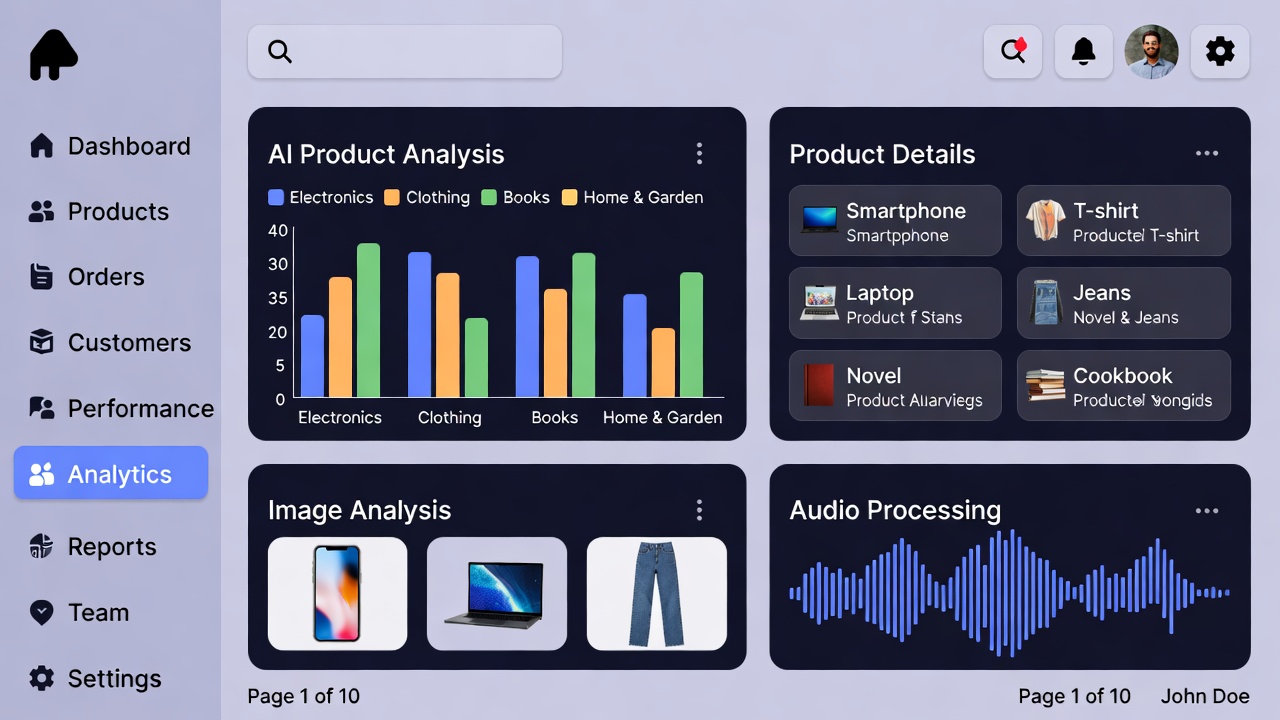
Traditional AI tools specialized in single data types. Text models processed words. Image models analyzed pictures. Audio models handled sound. Businesses needing to work across these boundaries had to stitch together multiple systems and manage the complexity themselves.
Multimodal AI changes this fundamentally. Models like GPT-4V and Gemini can now process text, images, and audio in unified workflows. A single prompt can analyze a product photo, read its label, and generate a complete catalog entry. Customer support systems can understand screenshots, voice messages, and typed text within the same conversation.
For small businesses, multimodal capabilities unlock automation opportunities that were previously impractical or prohibitively expensive.
Understanding Multimodal AI Capabilities
Multimodal AI models accept multiple input types and reason across them simultaneously. Rather than processing each modality separately, these models understand relationships between visual elements, written text, and spoken audio.
What multimodal models can do:
- Analyze images and answer questions about their content
- Extract text from photos and documents (OCR with understanding)
- Describe visual content in natural language
- Compare multiple images and identify differences
- Transcribe and analyze audio recordings
- Generate content that references visual inputs
- Follow instructions that combine text and image context
The practical implication is that businesses can build workflows that previously required human visual inspection or manual data entry. An employee spending hours cataloging products from photos can be replaced by an automated pipeline that processes hundreds of items in minutes.
Product Cataloging and Inventory Management
E-commerce and retail businesses maintain extensive product catalogs requiring detailed descriptions, accurate specifications, and quality images. Multimodal AI streamlines this entire workflow.
Automated Product Description Generation
Photograph a product and receive a complete listing:
import openai

def generate_product_listing(image_path):
    with open(image_path, "rb") as image_file:
        response = openai.chat.completions.create(
            model="gpt-4-vision-preview",
            messages=[
                {
                    "role": "user",
                    "content": [
                        {
                            "type": "text",
                            "text": """Analyze this product image and create a complete e-commerce listing including:
                            1. Product title (SEO optimized)
                            2. Key features (bullet points)
                            3. Detailed description (2-3 paragraphs)
                            4. Suggested category
                            5. Estimated dimensions if visible"""
                        },
                        {
                            "type": "image_url",
                            "image_url": {"url": f"data:image/jpeg;base64,{base64_encode(image_file.read())}"}
                        }
                    ]
                }
            ]
        )
    return response.choices[0].message.content
The model identifies product type, materials, colors, features, and brand elements visible in the image. Output quality often matches or exceeds hastily written human descriptions.
Quality Control Through Visual Inspection
Manufacturing and fulfillment operations use multimodal AI for automated quality checks:
- Identify defects in product images before shipping
- Verify packaging matches order specifications
- Check label accuracy against database records
- Flag items requiring human review
A fulfillment center might photograph each packed order before shipping, with AI verifying correct items, quantities, and condition. Errors get caught before reaching customers.
Inventory Verification
Physical inventory counts become faster with photo-based verification:
- Photograph shelf sections and count items automatically
- Compare visual inventory against system records
- Identify misplaced or incorrectly shelved products
- Document warehouse organization for audits
Customer Support Enhancement
Customer service interactions often involve visual elements that text-only AI cannot handle. Multimodal capabilities bridge this gap.
Screenshot and Image-Based Support
Customers frequently share screenshots when reporting problems. Multimodal AI can:
- Identify error messages and UI elements in screenshots
- Recognize product models from customer photos
- Understand the context of visual complaints
- Suggest solutions based on what the image shows
A customer sending a photo of a malfunctioning product receives immediate recognition of the model and relevant troubleshooting steps, without requiring manual lookup by support staff.
Visual Product Identification
Help customers identify products they want to purchase:
- Accept customer photos of items they want to match
- Identify products from partial or poor-quality images
- Find similar alternatives when exact matches are unavailable
- Provide specifications and pricing for identified items
Furniture retailers, fashion brands, and home goods stores particularly benefit from visual search capabilities that connect customer inspiration images to purchasable inventory.
Damage Assessment
Insurance, rental, and property businesses automate damage evaluation:
- Analyze before/after photos to identify changes
- Estimate repair costs from damage images
- Generate standardized damage reports
- Flag claims requiring expert human review
The consistency of AI assessment often exceeds human evaluators who may vary in their judgments.
Document Processing and Data Entry
Businesses handling paper documents, forms, and receipts spend significant time on manual data entry. Multimodal AI extracts information directly from document images.
Invoice and Receipt Processing
Photograph receipts and invoices for automatic extraction:
- Vendor name and contact information
- Line items with descriptions and amounts
- Tax calculations and totals
- Payment terms and due dates
- Purchase order references
Accounting workflows accelerate dramatically when document data flows directly into financial systems without manual transcription.
Form Digitization
Convert paper forms to structured data:
- Application forms with handwritten entries
- Surveys and feedback cards
- Inspection checklists
- Medical intake forms
The AI handles both printed and handwritten text, though handwriting recognition accuracy varies with legibility.
Business Card and Contact Import
Networking events produce stacks of business cards. Photograph them in batches and receive structured contact records ready for CRM import.
Marketing and Content Creation
Visual content creation and management benefit substantially from multimodal capabilities.
Image Tagging and Organization
Large media libraries require organization for efficient retrieval:
- Automatic tagging based on image content
- Scene and setting classification
- Object and product identification
- Style and aesthetic categorization
Marketing teams find assets faster when AI has tagged everything by content rather than relying on manual filename conventions.
Social Media Content Analysis
Monitor brand presence across visual platforms:
- Identify brand logos in user-generated content
- Analyze competitor visual strategies
- Track product placement in influencer posts
- Measure brand visibility in event coverage
Alt Text and Accessibility
Generate accurate alt text for website images automatically:
def generate_alt_text(image_url):
    response = openai.chat.completions.create(
        model="gpt-4-vision-preview",
        messages=[
            {
                "role": "user",
                "content": [
                    {
                        "type": "text",
                        "text": "Write a concise, descriptive alt text for this image suitable for screen readers. Keep it under 125 characters."
                    },
                    {
                        "type": "image_url",
                        "image_url": {"url": image_url}
                    }
                ]
            }
        ]
    )
    return response.choices[0].message.content
Accessibility compliance improves while reducing the manual burden of writing descriptions for every image.
Audio Processing Applications
Multimodal AI extends to audio processing, enabling voice-based workflows and audio content analysis.
Voice Message Handling
Customer support receives voice messages through various channels. AI processes these automatically:
- Transcribe voice messages to text
- Identify caller intent and sentiment
- Route to appropriate support queues
- Generate suggested responses for agents
Audio Content Analysis
Businesses with audio content libraries benefit from automatic processing:
- Podcast transcription and chaptering
- Meeting recording summarization
- Call center conversation analysis
- Audio quality assessment
Voice-to-Action Workflows
Field workers and mobile staff report information verbally:
- Verbal inspection reports converted to structured data
- Voice memos transcribed and categorized
- Dictated notes attached to customer records
- Spoken orders processed into transactions
Implementation Approaches
Deploying multimodal AI requires attention to integration, costs, and reliability.
API-Based Integration
Most businesses access multimodal capabilities through cloud APIs:
OpenAI GPT-4V:
- Strong general-purpose vision capabilities
- Excellent instruction following
- Well-documented API
Google Gemini:
- Competitive vision understanding
- Native Google Cloud integration
- Strong multilingual support
Claude Vision:
- Thoughtful, detailed image analysis
- Strong reasoning about visual content
- Anthropic API access
API usage involves per-token or per-image costs that require monitoring at scale.
Cost Management Strategies
Multimodal processing costs more than text-only operations. Manage expenses through:
- Batch processing - Group operations during off-peak hours
- Image optimization - Resize and compress before sending
- Caching - Store results for repeated queries
- Tiered processing - Use simpler models for routine tasks
- Human-in-the-loop - Reserve AI for high-value automation
Building Reliable Pipelines
Production multimodal systems need error handling:
- Graceful degradation when API services are unavailable
- Confidence thresholds triggering human review
- Logging and monitoring of processing accuracy
- Fallback workflows for failed extractions
Privacy and Data Considerations
Visual data often contains sensitive information requiring careful handling.
Personal Information in Images
Photos may capture:
- Faces of individuals requiring consent for processing
- Personal documents with private data
- Location information embedded in metadata
- Proprietary business information
Establish policies about what images can be processed through external APIs and what requires on-premises handling.
On-Premises Options
For sensitive applications, self-hosted models provide data isolation:
- Open-source vision models running locally
- Private cloud deployments with data residency controls
- Edge processing on local hardware
Capability may be reduced compared to leading API services, requiring trade-off evaluation.
Practical Getting Started Steps
Small businesses can begin with focused applications:
Low complexity starting points:
- Product photo description generation
- Receipt and invoice data extraction
- Alt text generation for existing image libraries
- Customer photo interpretation in support tickets
Building toward more sophisticated use:
- Integrate extractions with existing business systems
- Build review workflows for AI-generated content
- Train staff on effective use and limitations
- Measure accuracy and iterate on prompts
The most successful implementations start narrow, prove value, and expand based on demonstrated results.
Multimodal AI represents a significant capability expansion for businesses previously limited by the cost and complexity of visual and audio processing. Starting with clear use cases and building iteratively leads to practical automation that genuinely reduces workload while maintaining quality.