
AI video testimonials for a small business cost $0 to $200 a month for DIY collection with a tool like Testimonial.to or a free Loom link, $250 to $500 per finished clip with a managed AI edit, and $700 to $1,500 for a three-minute version. A traditional videographer still runs $2,000 to $3,000 for one polished piece, and in most cases that money is better spent on ten rough clips. The number that matters is cost per usable testimonial, not cost per shoot. One HVAC client got nine usable customer videos in seven weeks from a $24 tool, a prompt list, and a shared folder.
I learned that the expensive way. A two-truck HVAC company outside Columbus paid a local videographer $2,800 in 2022 for a brand video built around three scripted customer interviews. It looked like a regional ad. It converted worse than the raw phone clips customers were already texting the owner. The polished version read as marketing. The phone clips read as a neighbor recommending somebody.
Once we set up a deliberate collection process instead of waiting for videos to arrive by text, the quote request page went from a 4.1 percent conversion rate to 5.2 percent over five months. Nothing else on the page changed.
Below is what each tier actually costs, why length drives price more than AI does, which tools are worth paying for, and the collection process I use when a client has no budget for production.
How much does a testimonial video cost?
Four tiers cover almost every small business. The AI piece is editing and prompting, not filming. The customer still records themselves on a phone.
| Tier | What you get | Cost | Time to first clip |
|---|---|---|---|
| DIY with a free tool | Customer records on their phone, you trim in CapCut or Descript | $0 to $50 one time | 2 to 3 weeks |
| Collection tool | Shareable record link, prompts, branded page | $20 to $60 a month | 1 to 2 weeks |
| Managed AI edit | You collect, a service edits, captions, and returns clips | $250 to $500 per clip | 1 week |
| Videographer | Scripted shoot, crew, lighting, edit | $2,000 to $3,000 per video | 4 to 6 weeks |
The middle two tiers are where most small businesses should live. A collection tool plus your own editing gets you a library for under $500 a year. A managed edit is worth it when you have clips you want to reuse across paid social, in which case the per-clip price is spread across a campaign.
The hidden cost is coordination, not software. Someone has to ask, follow up, and gently chase the customer who said yes three weeks ago. That is two to four hours per finished clip if you do it yourself, and it is the line most cost estimates leave out.
How much does a 3 minute video cost?
Length drives price more than any other variable. A three-minute edit needs roughly three times the cut time of a 60-second clip, which is why managed services quote $700 to $1,500 for the longer version against $250 to $500 for the short one.
The practical answer is that you rarely need three minutes. Most buyers watch 15 to 40 seconds of a testimonial before deciding. A 45 to 60 second clip that answers one question, what changed after they hired you, outperforms a three-minute story on a service page.

Where length does pay: sales conversations and proposal embeds. A prospect who already watched a full three-minute case story arrives at the call warmer. Build the long version from the same footage after the short one works, not before.
AI affects the cost here in a specific way. Trimming silences, generating captions, and cutting vertical versions is now cheap and fast, so the marginal cost of a second format is close to zero. What AI does not fix is a bad answer. A customer who rambles for three minutes with no outcome statement still produces a useless clip.
What is the best video testimonial software?
Pricing moves, so verify before you commit. This is the shape of the market as of late 2026, ordered by what a small business should try first.
| Tool | Best for | Typical monthly cost |
|---|---|---|
| Free stack (Loom, Drive, CapCut) | Testing whether customers will actually record | $0 |
| VideoAsk | Async prompt-and-answer collection | $0 to $40 |
| Testimonial.to | A branded wall of customer videos | $50 and up |
| Vocal Video | Managed editing and publishing at volume | $100 and up |
Start with the free stack. It answers the only question that matters first: will your customers record a video at all. If they will, a dedicated collection tool saves enough admin to justify $50 a month. If they will not, no platform fixes that, and you need to change how you ask.
The same logic applies to editing tools. Descript and CapCut now handle silence removal, captions, and vertical crops for under $30 a month. Paying a managed service per clip makes sense once you have more footage than hours.
Collecting clips without a crew
The collection process matters more than the editing. These are the steps that produced nine usable clips for the HVAC client.
Ask at the moment of relief, not at the moment of purchase. The best window is right after a problem got solved: same day for emergency work, within a week for a scheduled job. A request sent a month later gets ignored.
Send one question, not a survey. “What was going wrong before you called us, and what happened after?” produces a usable answer in 40 seconds. Five questions produce a rambling apology.
Make the ask absurdly small. Say 30 seconds, say no retakes, say phone camera is fine. The objection is never the software, it is the fear of looking foolish.
Give them a link, not instructions. A record button removes the “how do I send it” step that kills half of these. That is the one place a paid tool earns its fee.
Follow up once, with a draft of what they might say. No response is usually a busy inbox, not a refusal. A second email with two example sentence starters converts a meaningful share of the people who ignored the first.
Offer something small and disclose it. A discount or gift card is fine, and it has to be disclosed wherever the testimonial appears.

What the numbers looked like
The HVAC client’s site is a useful case because almost nothing else moved during the test window.
- Quote request conversion on the page with two embedded clips: 5.2 percent, up from 4.1 percent five months earlier.
- Visitors who played a testimonial converted at 9.4 percent against 3.8 percent for those who did not. That gap is the number to chase, not view counts, because it filters for people who were already close to buying.
- Nine usable clips in seven weeks, from roughly 22 requests. About 40 percent of asks produced a usable video, which is a realistic response rate to plan against.
That last number sets your budget. If you need ten clips, send twenty-five asks. If each ask takes twelve minutes across two emails and a follow-up, that is five hours of admin, plus editing time. At $50 an hour, ten clips cost about $500 in labor on top of tooling, which is still below one videographer video.
Turning one clip into a month of distribution
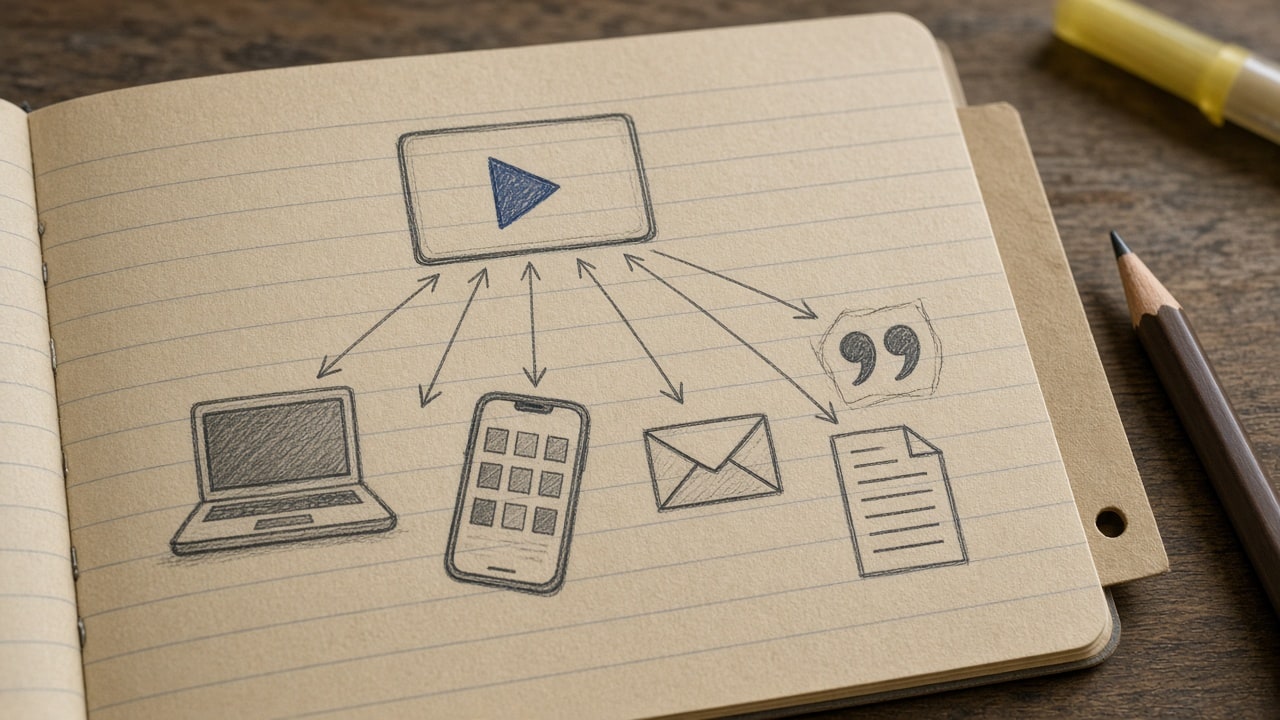
A finished testimonial is raw material. The same 60 seconds can carry five placements.
- The full clip embedded on the relevant service page, near the call to action.
- A 15-second vertical cut for Reels, Shorts, and TikTok.
- A pull quote as a static post or ad creative.
- The transcript as a short case study page, which also gives search engines something to index.
- The clip inside a proposal, quote email, or follow-up sequence.
Ask your questions with distribution in mind. “What made you choose us over the other quotes you got?” produces a sound bite that works in an ad. “Tell us about your experience” does not.
One clip a month is a sustainable cadence for a small business. A two-year-old testimonial reads as stale, and buyers notice when the newest proof on your site is from a different phase of the company.
Keeping them credible
The single most common mistake is over-editing. Heavy color grades, music beds, and jump-cut pacing make a customer look like an actor. Keep the background, the pauses, and the slightly awkward start. That is what makes people believe it.
Do not script answers. Prompts are fine, a teleprompter is not. The moment a customer reads, the credibility is gone, and viewers detect it faster than you expect.
Ask for a specific, checkable outcome. “They came out the same day and the heat was back by two” is proof. “Great service, highly recommend” is decoration.
Legal and accessibility basics
Three things need to be in place before you publish.
Written permission. Get a release that names the channels and how long you can use the clip. A text message saying “sure, go ahead” is weaker than a signed form, and most collection tools include a consent step, so turn it on.
Disclosure of incentives. If you offered a discount or gift in exchange for the video, say so wherever it appears. The FTC Endorsement Guides cover this, and the rule applies to small businesses exactly as it applies to brands with legal departments.
Captions and transcripts. Most social video is watched with sound off, and captions are also an accessibility requirement. Burn in captions for social, use the platform’s caption file for embedded players, and publish the transcript. Our WCAG accessibility guide covers the standard that applies, and a transcript solves the SEO and accessibility problem at the same time.
What to track
Four numbers tell you whether the program is working: the percentage of asks that produce a usable clip, play rate on embedded videos, conversion rate on pages with and without a testimonial, and hours of admin per finished clip. That last one tells you when to buy tooling.
For the ask itself, our guide to AI email automation for small business covers how to sequence the request so it lands at the right moment. If your clips are feeding a broader content calendar, leveraging AI for social media covers the posting cadence, and why your small business website is costing you customers covers where on the page the proof does the most work. Video generation tools are worth understanding too, and our Grok Imagine guide covers what generated footage can and cannot replace.
Conclusion
AI video testimonials cost $0 to $200 a month if you collect and edit them yourself, $250 to $500 per clip with a managed edit, and $2,000 or more for a produced video that often performs worse than a phone clip. Start with five asks, one question, and a free collection link. Spend on editing once you have more footage than time, and spend on production only when you can name what the polished version does that the raw one cannot.
If you want a testimonial program built and run alongside the rest of your content, our social media marketing service handles collection, editing, and distribution, and starts with the same five-ask test so the budget follows evidence.