A year ago, this post predicted how AI would reshape SEO over the next five years. The predictions were reasonable for June 2025. But twelve months changed everything faster than expected. AI Overviews went from experiment to default. Google’s March 2026 core update penalized bulk AI content at scale. New AI search engines - Perplexity, ChatGPT Search, Gemini - became genuine traffic sources, not curiosities.
This is not an update. It is a reckoning. What follows is what actually happened, what we got wrong, what surprised us, and what businesses need to do now to maintain search visibility in mid-2026.
What We Predicted vs. What Actually Happened
Prediction 1: AI Overviews Would Expand Gradually
What we said: AI Overviews would grow slowly, giving businesses time to adapt.
What happened: Google rolled AI Overviews to over 52% of searches by early 2026, up from roughly 15% in mid-2025. The expansion was not gradual. It was a switch flip. One week your keywords drove clicks. The next week the same keywords showed an AI-generated answer box that satisfied the query without a click.
The impact on click-through rates was immediate and severe. Studies from Ahrefs and Search Engine Land documented a 34.5% CTR drop for the #1 organic position when an AI Overview appeared. For informational queries - “how to,” “what is,” “why does” - the drop exceeded 50%.
What this means now: Ranking #1 is no longer enough. If your content answers a question that AI can summarize in three sentences, you will lose the click. The strategy shift is from answering questions to providing what AI cannot: original data, proprietary research, firsthand experience, and depth that exceeds a summary.
Prediction 2: Voice Search Would Become Critical
What we said: Voice search would grow, making conversational keyword improvement key.
What happened: Voice search grew, but not in the way we expected. Smart speaker usage plateaued. The real growth came from AI assistants - Claude, ChatGPT, Gemini - handling search-like queries through conversation. Users do not ask Alexa for restaurant recommendations anymore. They ask ChatGPT.
This is a different improvement problem. Voice search was about ranking for spoken queries. AI assistant search is about being cited as a source in generated responses. The mechanics are different. The goal is the same: visibility.
What this means now: Improve for AI citation, not just voice keywords. Clear structure, factual accuracy, and authoritative sourcing increase the likelihood that AI models reference your content. Structured data helps. Original research helps more.
Prediction 3: Multimodal SEO Would Emerge
What we said: Google’s MUM model would make image and video improvement as important as text.
What happened: Multimodal search exists but has not transformed SEO the way text-based AI Overviews have. Google Lens and visual search grew, particularly for e-commerce and local businesses. But the dominant AI search shift remained text-based: AI-generated answers, conversational interfaces, and citation-based responses.
What this means now: Do not ignore images and video - alt text, transcripts, and structured data still matter. But the urgent priority is text-based AI improvement: clear answers, structured content, and original insights that AI models want to cite.
What We Did Not Predict
Three developments caught most SEO professionals off guard:
1. The March 2026 Google Core Update
Google’s March 2026 update was not an incremental adjustment. It was a structural recalibration. Sites publishing bulk AI-generated content - 50 to 100 articles per week with minimal editorial review - lost 40-70% of organic traffic. The penalty was site-wide, not page-specific. Recovery required demonstrating sustained quality improvements across the entire domain.
The update did not ban AI content. It enforced existing standards: original value, transparent sourcing, genuine expertise. AI-generated content with human oversight, original data, and clear authorship maintained rankings. AI-generated content without those elements got penalized.
At Veduis, we documented our own recovery from a technical SEO issue that blocked indexation for 10 months. The experience taught us that technical fundamentals matter more than content volume. A site with 1,000 unindexable posts is less valuable than a site with 50 indexable ones. Our technical SEO audit guide covers the exact framework we used.
2. The Rise of AI-Native Search Engines
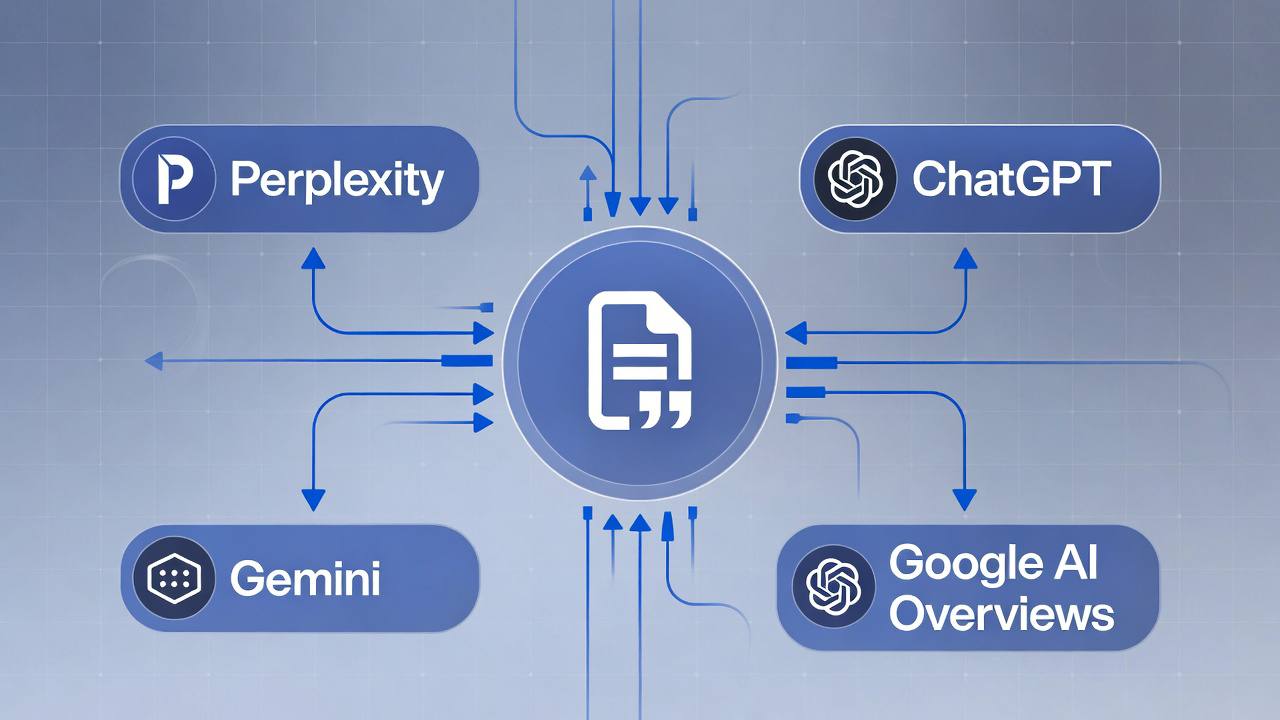
Perplexity crossed 100 million monthly queries by early 2026. ChatGPT added native web search. Gemini integrated Google Search directly. These are not features. They are alternative search interfaces that bypass traditional Google results entirely.
The improvement playbook for AI-native search is different:
- Citations over rankings: Perplexity cites sources inline. Being cited is the goal, not ranking #1.
- Recency matters: AI search engines weight recent content heavily. A 2024 article on a 2026 topic rarely gets cited.
- Factual precision: AI models fact-check against multiple sources. Inconsistencies or unsupported claims reduce citation likelihood.
3. Zero-Click Search Became the Default
Roughly 60% of Google searches now end without a click. For informational queries, the figure approaches 70%. This is not a temporary trend. It is the new baseline.
The implication is stark: if your business model depends on ad revenue from informational content, you need a new model. If your business model uses content to attract potential customers, you need content that AI cannot fully satisfy - content that requires a click to get the full value.
The New SEO Playbook for 2026
1. Target Queries AI Cannot Fully Answer
AI Overviews excel at definitions, summaries, and step-by-step instructions. They struggle with:
- Original research and data: Survey results, benchmark tests, proprietary analytics
- Expert analysis and opinion: Industry commentary, strategic recommendations, risk assessments
- Complex comparisons: Multi-factor evaluations with nuance and trade-offs
- Case studies with specific outcomes: Real projects, real numbers, real lessons
Your content strategy should prioritize these formats. A post titled “What Is MCP?” will get summarized by AI. A post titled “How We Reduced MCP Server Setup Time from 45 Minutes to 3 Minutes: A Case Study” will get cited and clicked.
2. Improve for AI Citations, Not Just Google Rankings
Traditional SEO improves for Google’s ranking algorithm. AI SEO improves for multiple algorithms: Google’s AI Overviews, Perplexity’s citation engine, ChatGPT’s source selection, and Gemini’s grounding system.
What increases AI citation likelihood:
- Clear heading structure with descriptive H2s and H3s
- Direct answers followed by supporting detail
- Numbered lists and tables for easy extraction
- Original statistics with source attribution
- Author credentials and transparent expertise
- Recent publication dates on time-sensitive topics
What decreases AI citation likelihood:
- Vague or generic advice applicable to any industry
- Unsupported claims without data or examples
- Keyword-stuffed content that reads unnaturally
- Outdated information on rapidly changing topics
- Missing authorship or unverifiable expertise
3. Build Topical Authority, Not Isolated Pages
AI search engines evaluate content in context. A single strong page on a topic is less valuable than a cluster of interconnected pages covering that topic thoroughly.
What works:
- A pillar page on “AI SEO” linking to cluster pages on technical SEO, content strategy, E-E-A-T, and AI tools
- Cluster pages linking back to the pillar and to each other
- Internal links using descriptive anchor text
- Related content sections based on semantic relevance, not just recency
What does not work:
- Orphaned pages with no internal links
- Generic “related posts” plugins matching by tag alone
- Footer links to every page on the site
Our internal linking strategy guide covers implementation in detail.
4. Maintain Technical Excellence
The March 2026 update reinforced a truth that technical SEO professionals have known for years: a site with broken crawlability will not rank, regardless of content quality.
Critical checks:
- Verify in Google Search Console that pages are crawled and indexed, not just submitted
- Check for “Crawled - currently not indexed” status - this often signals technical blockers
- Use the URL Inspection tool to see how Googlebot renders your page
- Monitor Core Web Vitals - page experience signals are confirmed ranking factors
- Confirm mobile usability - Google’s mobile-first indexing means mobile issues are site-wide issues
5. Use AI as an Amplifier, Not a Replacement
The most resilient content model in 2026 is expert-led, AI-assisted. A subject matter expert defines the angle, provides the insights, and reviews the output. AI handles research synthesis, drafting, formatting, and improvement.
The workflow that works:
- Expert defines the angle: What specific question are we answering? What unique perspective do we have?
- AI researches: Compile existing information, identify gaps, suggest structures
- Expert writes key sections: The insights requiring domain knowledge - the “experience” in E-E-A-T
- AI drafts supporting content: Explanations, transitions, summaries
- Expert reviews and edits: Fact-checking, tone adjustment, specific examples
- AI improves: Meta descriptions, header structure, internal linking suggestions
What breaks this model: Skipping steps 1, 3, or 5. AI-generated content without expert input reads as generic because it is generic - it represents the average of existing content, not a specific perspective.
What to Expect in the Next 12 Months
Predicting the future is risky. But several trends are clear enough to act on:
AI Overviews will expand to transactional queries. Currently concentrated on informational searches, AI-generated answers will increasingly appear for product comparisons, service evaluations, and purchase decisions. E-commerce and B2B service sites need to prepare content that AI cannot fully satisfy - detailed comparisons, proprietary methodologies, and unique value propositions.
AI search engines will add advertising. Perplexity and ChatGPT Search are free services with real infrastructure costs. Advertising integration is inevitable. Early adopters of AI search advertising will have lower costs and higher visibility before competition increases.
Google will refine E-E-A-T signals. The March 2026 update was a blunt instrument. Future updates will be more precise, distinguishing between genuinely helpful AI-assisted content and low-value bulk output. Sites that invest in clear authorship, original data, and transparent expertise will benefit.
Regulatory pressure will increase. The EU AI Act, New York’s RAISE Act, and similar legislation will impose transparency requirements on AI-generated content. Disclosing AI assistance will become a compliance issue, not just an ethical choice.
Action Plan
This week:
- Audit your top 20 pages by organic traffic. Identify which ones answer questions that AI could summarize in three sentences. Flag these for updates.
- Check Google Search Console for “Crawled - currently not indexed” pages. Fix technical blockers first.
- Verify your top pages have clear authorship, original insights, and structured data.
This month:
- Update 5-10 old posts with original data, expert insights, or case studies. Prioritize posts that lost traffic after March 2026.
- Implement internal linking between related posts. Aim for 3-5 internal links per new post.
- Add structured data - Article, FAQ, or HowTo schema - to high-traffic pages.
This quarter:
- Establish an expert-led, AI-assisted content workflow.
- Build a content calendar around original research and data.
- Monitor traffic from AI search engines. Perplexity and ChatGPT Search provide referral data in analytics.
Summary
AI did not kill SEO. It changed what SEO means. Ranking #1 on Google is still valuable, but it is no longer sufficient. Visibility now requires improving for AI Overviews, AI-native search engines, and zero-click environments.
The businesses that thrive in 2026 are those that combine AI’s efficiency with human expertise. AI handles research and drafting. Humans provide original insights, verify accuracy, and ensure content reflects genuine experience.
The goal is not to outrank AI. It is to become a source that AI wants to cite.