
In March of last year a client called me on a Sunday morning. His website had gone from 40,000 organic visits a month to about 17,000 in nine days flat. In a panic, he had already rewritten his homepage copy, unpublished 30 blog posts without redirects, and was actively collecting bids for a $25,000 site redesign.
None of those decisions helped, and two of them made the hole significantly deeper.
Over the past four years, I have walked five separate businesses through verified Google core update recoveries. The sites that climbed back followed the exact same sequence: confirm the update fingerprint, isolate the losses in Google Search Console, merge thin overlapping content, rewrite for genuine first-hand experience, and accept the natural re-scoring cycle. The sites that spiraled downward all attempted fast, sweeping changes in the first fourteen days.
Here is the exact diagnostic and repair process I run with clients, ordered from highest impact to lowest friction.
Step One: Confirm It Was Actually a Core Update
Half of the “core update penalties” founders bring to me turn out to be self-inflicted technical errors or natural seasonality. A broken tag manager container, a developer deploying an unvetted robots.txt disallowing /blog/, or an unaddressed manual action will crater traffic just as fast as an algorithmic shift.
Before touching a single URL, verify the source of the drop.
Start with the Google Search Status Dashboard. Google documents every official ranking rollout with explicit start and completion timestamps. Broad core updates roll out over two to three weeks. If your traffic decline began inside that announced rollout window and does not correlate with an internal code deployment, you are likely looking at core algorithmic re-evaluation. If the drop started three days before the rollout began, look elsewhere.
Next, eliminate the common false positives:
- Indexation Drops: Open Google Search Console and inspect the Pages report. If valid indexed pages suddenly dropped into “Not Indexed” or 404 errors, you are dealing with a technical crawling failure, not a content quality demotion.
- Manual Actions & Security: Verify that the Security & Manual Actions tabs show green checkmarks with zero detected issues.
- Year-over-Year Seasonality: Compare the trailing 28 days against the exact same period last year to strip out industry-wide holiday or seasonal slowdowns.
- AI Overviews vs. Core Drops: In 2026, many traffic drops blamed on core updates are actually Google’s AI Overviews and AI Mode answering questions directly on the search engine results page. If impressions remain steady while clicks fall 35% on top-of-funnel informational queries, your ranking did not slip. The search interface evolved. We analyzed this shift in depth in our breakdown of how Reddit login walls and AI Overviews alter search visibility.
A true core update decline has an unmistakable signature: rankings drift downward across a broad cluster of pages simultaneously, impressions and clicks contract together, and indexation counts remain flat.

Step Two: Segment the Damage Before Making Changes
Making blind edits across your entire website during an active rollout creates noise that confuses both users and search crawlers. Instead, export 16 months of Google Search Console performance data and slice the metrics three distinct ways.
1. Segment by URL
Identify which specific pages lost the largest volume of clicks and impressions. In every recovery audit I conduct, roughly 10% to 20% of existing URLs account for over 80% of the total traffic loss. This is where your attention must focus. Do not spend time revising pages that retained their rankings.
2. Segment by Query Position
Review which keywords fell, and how far. A drop from position 2 to position 5 indicates that Google simply preferred a fresher or more authoritative competitor for that intent. A drop from position 3 to position 45 signals that Google reclassified the entire URL as failing baseline helpfulness or relevance criteria.
3. Segment by Query Class
Did informational blog queries collapse while commercial service pages held firm? Or did rankings degrade site-wide, including your brand terms and homepage?
On the Sunday client call I mentioned earlier, his transactional service pages retained their page-one rankings almost untouched, while his company blog shed 62% of its clicks. That clear pattern confirmed that Google re-evaluated the depth and originality of his informational articles, not the technical foundation or domain trustworthiness of his business. When rankings decline uniformly across brand queries, homepages, and product categories, site-wide trust factors and technical barriers are the primary culprits.
Once you have identified the losing queries, open an incognito browser window and manually search the top ten terms. Inspect what Google’s algorithm currently elevates to positions one through three. If the top results are detailed teardowns featuring custom calculators, original screenshots, and direct pricing data, while your page is an 800-word generic summary, the algorithm shifted what the query requires. Feeding authentic intent signals into your editorial briefs is vital, as outlined in our search intent analysis framework.
Step Three: The Step-by-Step Content Remediation Playbook
Google’s documentation makes it clear: core updates do not apply manual penalties. They represent an algorithmic recalibration of overall content quality and relevance. The work required to satisfy that bar is disciplined and methodical.
1. Merge or Prune Thin, Overlapping Posts
This single step consistently generates the largest traffic recovery, yet site owners resist it the most.
Pull your complete site inventory into a spreadsheet alongside 12 months of traffic data. Flag every URL that receives fewer than 10 clicks per month and addresses a keyword that another article on your site already targets.
On one B2B software site, we identified eight separate articles all targeting minor variations of cloud backup configurations. None of the eight ranked on page one. We extracted the unique insights from each, consolidated them into two focused pillar guides, and implemented permanent 301 redirects from the six retired URLs. Within eight weeks, the two consolidated guides ranked in positions 2 and 4, capturing more total organic traffic than all eight legacy posts combined at their historical peak.
Follow these strict rules when consolidating:
- Never delete a URL that has earned valuable external backlinks or generates paying leads.
- Always apply standard 301 redirects to the most relevant surviving page; never leave orphaned 404s.
- Avoid mass-deleting 50 pages overnight during an update; roll changes out in structured clusters.
2. Rewrite for First-Hand Practitioner Experience (E-E-A-T)
The common denominator among websites demoted by core updates since 2024 is commoditized content: articles that could have been compiled by an automated scraper summarizing the top five Google results.
A meaningful rewrite does not mean tweaking an introductory heading or inserting synonyms. It requires infusing the content with proprietary evidence that only someone operating in your field could produce:
- Real operational metrics, timelines, and costs from your actual projects.
- Unedited screenshots of production dashboards, configurations, or lab environments.
- Explicit discussions of failures, mistakes, and workarounds.
- Strong, defensible opinions that challenge conventional industry marketing copy.
Google rewards content that demonstrates direct practical involvement. An engineering guide that explains “how our team triaged a live memory corruption exploit on production servers” will consistently outperform a generic checklist. We applied this exact standard when dissecting critical web infrastructure flaws in our OWASP Top 10 web security guide.
3. Rebuild Internal Linking Architecture
Demoted sites frequently display broken internal link hierarchies. Strong, high-authority pages sit isolated, while deep topical articles receive zero incoming internal links from relevant context.
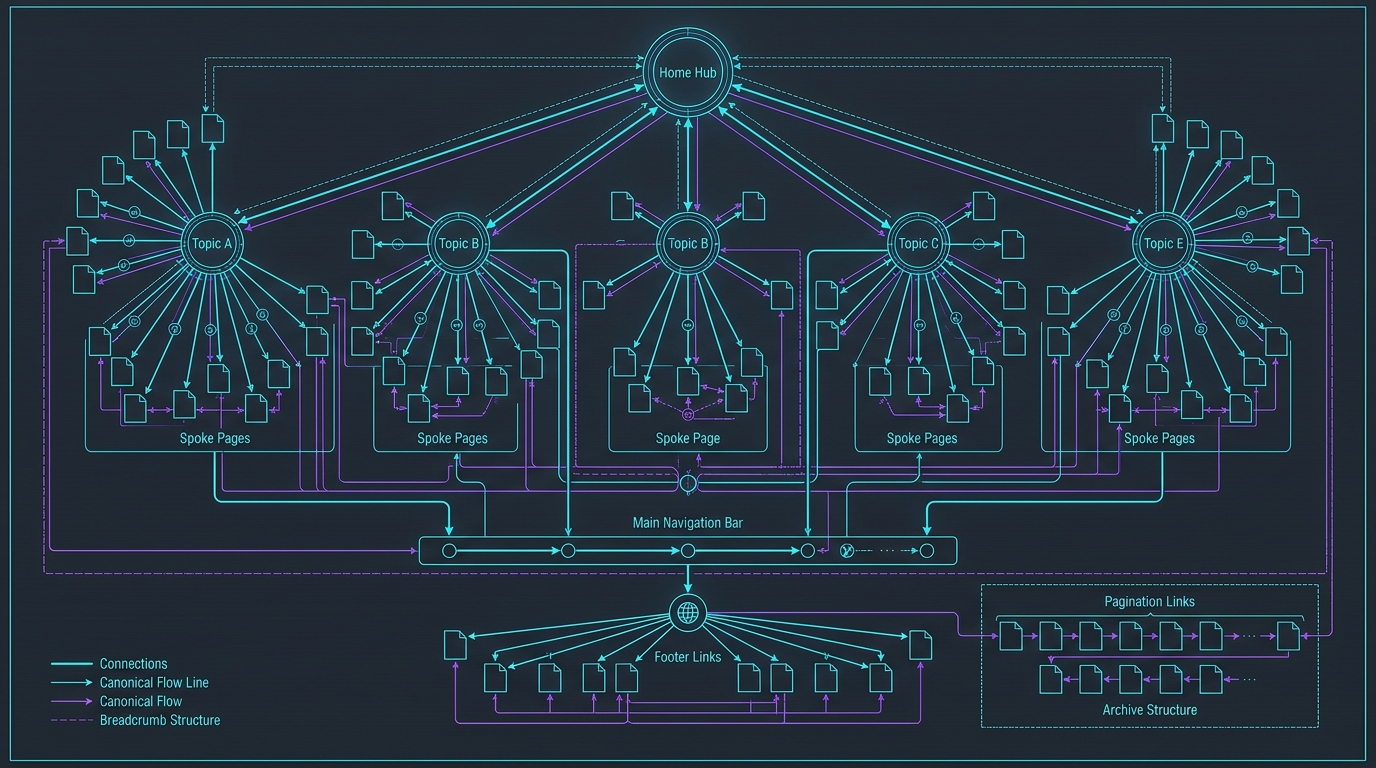
Audit your link architecture to establish clear thematic clusters:
- Ensure every recovering page is linked contextually from your highest-authority articles using natural, descriptive anchor phrases.
- Keep all priority content reachable within three clicks of the homepage.
- Eliminate excessive footer links containing dozens of exact-match keyword variations, which dilute crawl equity.
- Audit your technical foundation in parallel using our technical SEO audit checklist to ensure search spiders can index updated content without crawl budget waste.
4. Upgrade On-Page Trust Signals
Search quality raters and algorithmic classifiers evaluate site-wide trust indicators. Verify that basic accountability elements are clearly visible:
- Ensure every article features a named author linked to an authoritative author profile containing real professional background credentials.
- Maintain transparent publication and last-modified dates that accurately reflect substantive editorial updates.
- Provide a clear, accessible Contact page with physical location signals, phone numbers, and legitimate support channels.
- Back up technical claims with direct links to primary documentation, industry standards, and peer-reviewed research.
5. Address Web Performance Bottlenecks
While page speed alone will not reverse a core update hit, severe performance regressions compound ranking vulnerability. If your Largest Contentful Paint (LCP) exceeds 3.5 seconds or Interaction to Next Paint (INP) exhibits noticeable input delay, tune your asset delivery. Review our benchmark analysis on Core Web Vitals and organic search performance to keep infrastructure responsive without chasing diminishing returns.
Step Four: The Real Timeline for Algorithmic Re-evaluation
The most difficult aspect of core update recovery is setting realistic timeline expectations with executives and stakeholders.
Google’s search relations team has confirmed that broad quality re-evaluations occur primarily during subsequent core updates. While individual URL improvements can register incrementally, systemic recovery across an entire domain typically requires a full algorithmic refresh cycle.

Because Google rolls out broad core updates approximately every three to four months, expect the following realistic recovery milestones:
| Phase | Timeline | Primary Objective | Milestones & Deliverables |
|---|---|---|---|
| Phase 1: Triage & Audit | Weeks 1 - 2 | Verification & Segmentation | Isolate impacted URLs in GSC, verify status dashboard, halt panicked site-wide edits |
| Phase 2: Consolidation | Weeks 3 - 6 | Pruning & Merging | Consolidate thin overlapping URLs, implement 301 redirects, remove duplicate topical clutter |
| Phase 3: Deep Rewrites | Weeks 7 - 12 | Experience Infusion | Rewrite 2 to 3 priority articles per week with proprietary data, screenshots, and first-hand E-E-A-T |
| Phase 4: Link Reinforcement | Weeks 13 - 16 | Internal Hierarchy | Rebuild topic clusters, connect high-authority hubs to revised spokes, update sitemaps |
| Phase 5: Algorithmic Re-scoring | Weeks 16 - 24 | Next Core Update Window | Monitor Search Console impressions as Google’s next official update evaluates rewritten content |
Across the five recoveries I have managed:
- Two sites regained over 85% of their pre-update traffic during the immediate subsequent core update.
- Two sites saw partial 40% recoveries on the next update, achieving complete recovery on the second update (six to eight months total).
- One site never returned to its historical traffic peak. Its peak had been generated by programmatic affiliate pages that Google permanently devalued. However, because the owner pivoted to high-intent educational guides, their lead conversion volume actually increased by 22% despite lower raw visitor counts.
Panicked Reactions That Worsen the Damage
When organic search revenue drops, human instinct favors dramatic action. Avoid these five common pitfalls:
- Mass-Deleting Half Your Content in Week One: Purging dozens of pages without redirect mappings destroys long-tail keyword visibility and creates sudden volatility while Google is actively crawling.
- Bulk Rewriting with Low-Tier AI Prompts: If an update demoted your site for generic, thin content, generating thousands of automated summary paragraphs with zero original research will cement your lower ranking.
- Migrating Domains or Changing URL Slugs Mid-Recovery: Domain migrations reset historical link equity and complicate tracking during a critical evaluation window.
- Buying Backlink Packages to “Offset” Losses: Algorithmic core updates evaluate page relevance and site helpfulness. Purchasing low-quality links introduces algorithmic spam risk on top of an existing quality demotion.
- Obsessing Over Daily Keyword Rank Tracking: Core updates fluctuate wildly during rollout. Making daily reactive tweaks introduces instability and prevents your site from establishing a clean baseline.
What Most Recovery Guides Get Wrong
Most published advice treats a core update as a temporary penalty that can be cleared by ticking off a superficial checklist: update your meta descriptions, inject JSON-LD schema, compress images, and wait fourteen days.
That premise fails because a core update is a fundamental re-scoring of relative value against every other website in your vertical. There is no automated penalty flag to remove. Furthermore, guides promising complete recovery within thirty days ignore the physical cadence of Google’s crawling and indexing pipeline.
The only strategy that consistently works is treating a core update as an unfiltered audit of your business’s content baseline. Identify the URLs that failed to deliver standalone value, replace or merge them with authoritative practitioner knowledge, structure your internal links cleanly, and allow the search index sufficient time to re-score your domain.